
Ear
Treatments

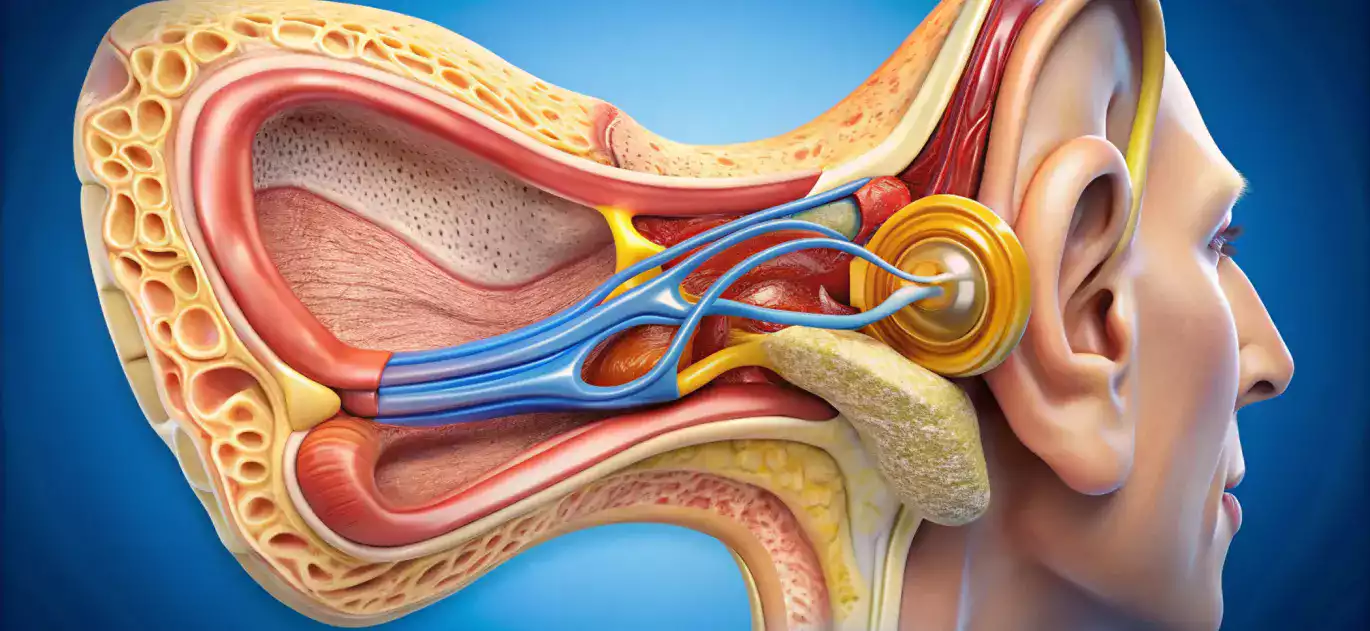
The middle ear is a tiny air-filled space near your eardrum that helps transfer the sounds from the outer ear to the inner ear through small bones (ossicles).

The ossicles vibrate when the sound hits the eardrum, which helps in hearing. They are like a speaker system, but just tiny and powerful, that helps you hear different sounds and different frequencies clearly.

Ear Care

Middle
Ear

Disease & Medical Conditions Of Middle Ear

The outer ear is separated from the middle ear by an air-filled hollow space called Tympanic Canal. The middle ear has an important function to perform; it takes the acoustic sound waves from air to fluid medium into the inner ear within the cochlea.

Disease & Medical Conditions
of Middle Ear

Otitis Media

Otitis Media is an acute form of middle ear infection or inflammation, seen especially in infants, toddler, and older children. Symptoms of Otitis Media include difficulty in hearing, fever, vomiting, diarrhea, head and neck pain, bad temper, crying and lack of balance.

Otitis Media

Cholesteatoma

Cholesteatoma is characterized by non-cancerous and abnormal skin growth in the middle ear, behind eardrum. This medical condition can be genetic or due to recurrent infection in the middle ear.

Cholesteatoma

Tympanosclerosis

This condition is called as ‘Scarring of the eardrum’. It happens due to the injury to the eardrum or after the surgery. Calcification of middle ear leads to hearing loss and white patches are seen in the middle ear.

Tympanosclerosis

Barotrauma

Barotrauma is seen mainly in people who practice diving and trekking. This occurs due to changes in the air pressure and velocity. Indications of barotrauma include giddiness, discomfort in the ear, acute pain in the ear, difficulty in hearing, bleeding from the nose, damage of eardrum, etc.

Barotrauma

Conductive Hearing Loss

Conductive hearing loss occurs when there is a problem directing sound waves gets blocked anywhere in the outer ear, eardrum or ossicles. Causes of conductive hearing loss are the recurrent infection of the middle ear, trauma, fluid accumulation and ear wax build-up.

Conductive
Hearing Loss

Otosclerosis

Otosclerosis is characterized by abnormal growth of bone in the middle ear. This bone intrudes the structures within the ear from working properly and causing hearing loss.

Otosclerosis
Tympanic Membrane Retraction

Eardrum consists of two parts – pars tensa (main part) and pars flaccida (the smaller part). When the eardrum or tympanic membrane (eardrum) is located below or pushed inwards from its normal position is called as Eardrum retraction.

Tympanic
Membrane Retraction

Our ENT Surgeon in Coimbatore provides various treatments and surgeries for conditions that stop you from hearing clearly and vibrantly. These include-

  • Otitis media (ear infection)
  • Cholesteatoma (abnormal skin growth)
  • Tympanosclerosis
  • Barotrauma (pressure damage)
  • Conductive hearing loss
  • Otosclerosis and tympanic membrane retraction (eardrum retraction).

The surgeons provide medicines or surgery as the treatment option, depending on the problem you face - ear infection, perforated eardrum and others. Most of these procedures are done like day surgeries, which can take a few days or weeks to recover from. Get assessed today with our expert ENT team and hear clearly!

Frequently Asked Questions

1. What are the Symptoms of a Middle Ear Infection?

Common Symptoms of a Middle Ear Infection include

  • Ear Pain
  • Reduced hearing
  • Ear fullness
  • Fever
  • Fluid discharge
  • Ringing sounds
  • Pressure inside the ear

Children with a middle ear infection may become irritable, tug at their ears, or have trouble sleeping. Symptoms can vary from person to person. If your symptoms are severe or last for more than a few days, you should see our ENT Specialist to evaluate your condition.

2. How does the Middle Ear affect your hearing?

The middle ear is an air-filled cavity behind your eardrum. It has three bones called the malleus, incus, and stapes. These bones help make sound vibrations louder. Even small problems can cause hearing loss if the middle ear is not working properly. If you are unsure about your hearing, you should consult our Best ENT Doctor, Dr. P.G. Visvanathan, to improve your hearing.

3. What treatments are available for Middle Ear Disorders?

We treat Otitis Media, Chronic Ear Discharge, Cholesteatoma, Otosclerosis, Eardrum Perforations and Eardrum Dysfunction in our ENT Clinic in Coimbatore. All of these conditions are different in severity, but they should be given appropriate attention, as the untreated Middle Ear Disease may cause permanent hearing impairment.

4. What is Cholesteatoma, and is it serious?

Cholesteatoma is an abnormal skin growth that forms in the Middle Ear due to recurrent ear infections or a wound that is not healing. When untreated, it may destroy ear bones and cause severe complications such as Hearing Loss and spreading infections. It needs to be removed surgically and treatment usually involves Surgery to remove the growth and prevent complications.

5. What is otosclerosis and how is it treated?

Otosclerosis is a disease in which the abnormal development of the bone in the Middle Ear makes one of the small bones of hearing, typically the stapes, immobile and unable to vibrate normally. This leads to a gradual hearing impairment. The treatment can be either hearing aids or a surgical operation known as a stapedectomy. Treatment may include hearing aids or a Surgery called stapedectomy, depending on severity.

6. What is Glue Ear in children?

Glue Ear also known as Otitis Media with Effusion, is the accumulation of thick fluid in the Middle Ear without any indication of infection. It is quite common among young children and may lead to temporary Hearing Loss, which interferes with speech development. We manage it with watchful waiting, medication, or small ventilation tubes (grommets) placed in the eardrum when necessary.

7. How do Middle Ear problems affect your balance?

Middle Ear issues are Middle Ear problems that usually affect hearing more than balance, which is commonly linked to the inner ear. But sometimes fluid accumulation or pressure swings in the Middle Ear may produce a fullness or slight imbalance. Our ENT Doctor in Coimbatore will assess the causes of your balance issues as either Middle Ear or the Inner Ear.

8. What surgeries are done for Middle Ear Problems?

We perform Tympanoplasty, Mastoidectomy (when the ear has chronic infections), Ossiculoplasty (reconstruction of the hearing bones), Stapedectomy, and Grommet Insertion. All the operations are carried out with modern microsurgical instruments such as the Carl Zeiss Sensera Operating Microscope, which provides our ENT Surgeons with the magnification they require to operate in such a small, sensitive area.

9. How long does it take to recover after Middle Ear Surgery?

Recovery duration varies depending on the Surgery. The insertion of grommets is a one-day Surgery. Tympanoplasty usually takes several weeks of special care. Mastoidectomy can be more time-consuming. At Vikram ENT Hospital, we maintain close contact with all patients after Surgery to ensure they are healing and to respond to any concerns.

10. When is Cochlear Implant Surgery needed for Hearing Loss?

Cochlear Implant Surgery may be recommended for people with severe to profound hearing loss who do not benefit enough from hearing aids. It is most commonly used when the inner ear cannot process sound effectively. A detailed hearing evaluation is required to determine suitability.

Google Review Star

4.7