Ear
Treatments

Ear Care

Skull base &
Otoneuro surgery

Skull base Otoneuro surgery

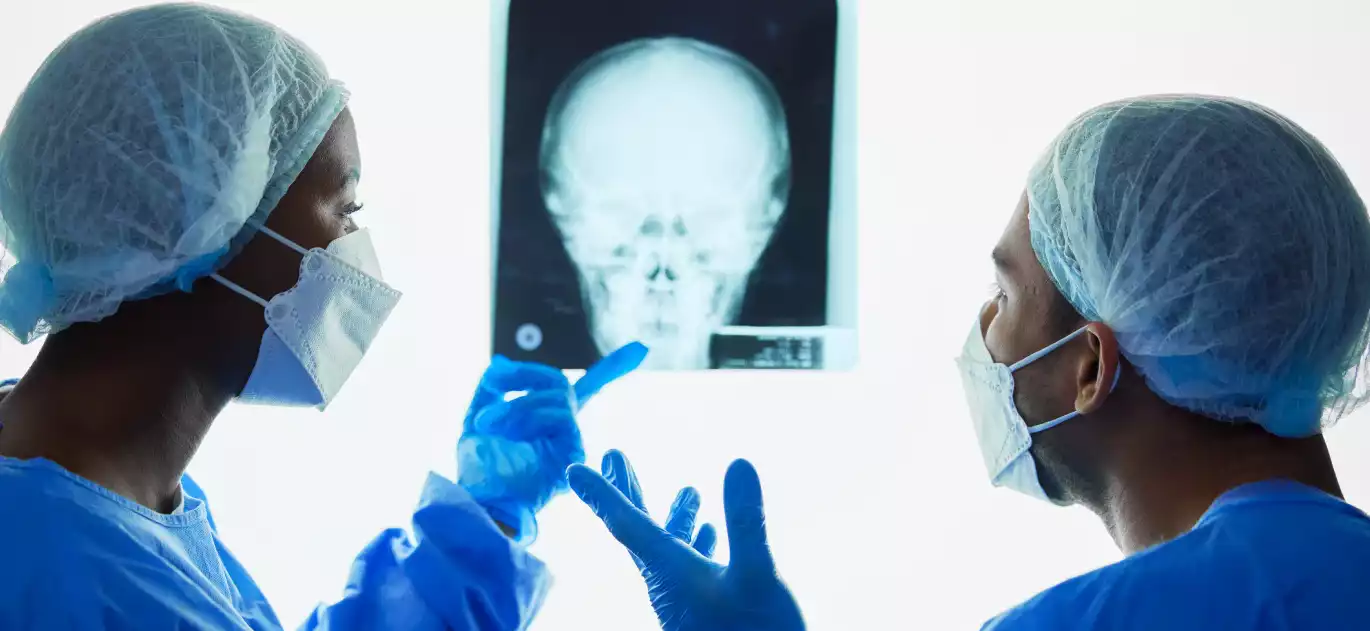
Skull base & Otoneurosurgery are used to treat tumours formed at the base of the skull or on the auditory nerve respectively.

Skull base &
Otoneuro surgery

Frequently Asked Questions

1. How is Skull Base Surgery different from regular ENT Surgery?

Skull Base Surgery is an operation on the complicated bony structures that make up the floor of the skull, which is immediately adjacent to the brain, great vessels and cranial nerves. It involves a unique skill set of ENT and neurosurgical skills. Skull Base Surgery requires a multidisciplinary team and the Best ENT Surgeon, our Dr. Anjana Visvanathan, Skull Base and otoneurosurgeon.

2. What conditions are treated with Skull Base Surgery?

We treat acoustic neuromas, glomus tumors, ear canal meningiomas, CSF leaks and other lesions at the ear-brain junction. These are those conditions that require accuracy, experience and the appropriate technology, which we possess in our ENT Hospital in Coimbatore.

3. How are conditions involving the ear and brain treated?

Conditions involving both the ear and brain, such as acoustic neuromas, skull base tumors, and facial nerve disorders, often require combined ENT and neurosurgical expertise. Treatment may include imaging, monitoring, or minimally invasive surgery depending on the condition and symptoms.

4. How are facial nerve conditions treated?

Facial nerve conditions may be caused by tumors, injury, infection, or inflammation. Treatment depends on the cause and may include medication, monitoring, rehabilitation or surgery. During surgery, facial nerve monitoring may be used to help protect nerve function.

5. How is Skull Base Surgery performed, and will there be scars?

Endoscopic skull base approaches can be employed depending on the condition and location of the tumor or lesion. These are minimally invasive procedures that maymay shorten recovery time and help reduce surgical risks. Our Karl Storz Endoscopy Suites contribute to this degree of precision surgery and good visualization.

6. What is an acoustic neuroma and its treatment?

An acoustic neuroma is usually a noncancerous tumor that develops on the nerve between the ear and the brain. Symptoms are one-sided hearing loss, tinnitus, and balance. Depending on size and progression, treatment can be by observation, microsurgery or radiosurgery. At Vikram ENT, we consider every case and then recommend the way ahead.

7. How do I know if I need Skull Base Surgery?

The majority of the patients do not come in knowing that they require Skull Base Surgery. They present themselves with unexplained deafness, incessant dizziness, weak facial muscles, or headaches. Diagnosis is made through clinical evaluation, scans, and hearing or balance tests. condition after diagnostic imaging and examination by our Top ENT Doctors in Coimbatore. Early diagnosis may help prevent complications and support timely treatment.

8. How long does it take to recover after Skull Base Surgery?

Recovering from Skull Base Surgery takes time. This is because the type of surgery and how complicated the Skull Base Surgery is are important. If the Skull Base Surgery is not too bad, you can go home in a day. If the Skull Base Surgery is really complicated, you will have to stay in the hospital for a while and get better little by little.

The people caring for you will tell you how to take care of yourself while you recover from Skull Base Surgery.

9. What are the risks of Skull Base Surgery, and how are they reduced?

Skull Base Surgery is a procedure, and it can have risks, like bleeding, infection, nerve damage, or fluid leaks. These risks can be reduced by planning, using advanced machines to look at the body, having experienced surgeons and nurses and watching the patient closely after surgery. The person's condition and the type of surgery they need determine the risk. Cerebrospinal Fluid leaks are a type of complication that can happen after Skull Base Surgery. It is very important to watch for signs of a Cerebrospinal Fluid leak.

10. Is Skull Base Surgery very risky?

Skull Base Surgery is a procedure. It is performed near the brain. It is also done near nerves and major blood vessels. Skull Base Surgery carries risks. These risks include bleeding. There is also a risk of infection. Nerve-related complications can happen, too. With the help of modern imaging and advanced surgical tools, our experienced specialists perform the surgery.

They minimize the risks and most Skull Base surgeries are performed safely. Our most experienced ENT Surgeon, Dr. Aruna Visvanathan, performs these surgeries carefully with compassionate care.

Google Review Star

4.7