
- Home
- Treatments
-
Inner Ear
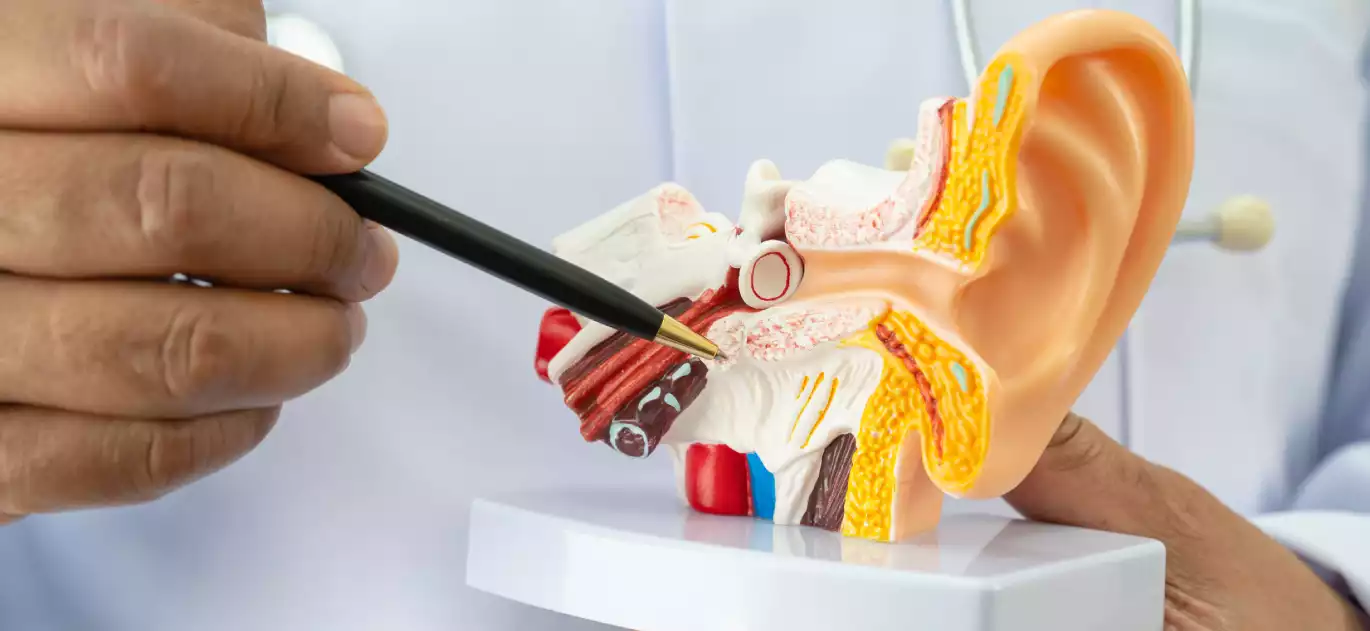
The inner ear, as the name suggests, is the innermost part of your ear. The fluid-filled structure is what helps you with your hearing (by the cochlea) and your balance (by the vestibular system).
Even if one of them doesn’t work properly, you can feel the sounds are dull or inaudible, or it might also cause you dizziness and unsteadiness.
Vikram ENT Hospital in RS Puram provides treatments for
- Vertigo
- Labyrinthitis
- Bilateral vestibulopathy
- Balance disorder (commonly known as ear balance)
- Sensorineural hearing loss
- Autoimmune inner ear disease
- Enlarged vestibular aqueduct
- Benign paroxysmal positional vertigo

Inner
Ear
Disease & Medical Conditions
of Inner Ear
The innermost part of the ear, which is responsible for sound detection and balance is called inner ear. The two main functions of the inner ear are hearing (converting mechanical)

Vertigo
Vertigo can be both problematical and non-problematical; however, effective treatments are possible. The meaning of ‘vertigo’ is ‘dizziness’ or ‘giddiness’, and from the name itself one can derive the nature of the disease. Generally, two kinds of vertigos are identified,

Labyrinthitis
Labyrinthitis is a disorder of inner ear or the infection of the vestibular nerves.The cause for this is the malfunctioning of the vestibular nerves, which controls movement in humans.

Bilateral
Vestibulopathy
The inner balancing control of both of the ears gets missing in this medical condition, and because of this, the patient has difficulty walking and also has visual disturbances.

Balance
Disorder
Here, as the name itself sounds, the innate balancing power of the patient is lost. Consequently, the patient will feel unsteady or giddy even when he or she stays static.

Sensorineural
Hearing Loss
This medical condition of inner ear occurs as a result of the damage to tiny hair cells in the cochlea and the related parts, the vestibulocochlear nerve, or the neural area. The Sensorineural hearing loss will make social life more or less impaired or restricted,

Autoimmune
Inner Ear Disease
Autoimmune inner ear disease (AIED) is a characteristic of inner ear problem in which the body’s immune system by mistake attacks its inner ear. Here, the patient will experience considerable hearing loss, which will block him or her from the fullness of the usual day-to-day activities.

Enlarged
Vestibular Aqueduct
Enlarged Vestibular Aqueduct is characterized by enlarged vestibular aqueduct. The small bony-canal that goes to the brain from the endolymphatic space in the inner ear is termed as the vestibular aqueduct. In this condition, the individual will have hearing loss and recurrent vertigo.

Benign Paroxysmal
Positional Vertigo
Enlarged Vestibular Aqueduct is characterized by enlarged vestibular aqueduct. The small bony-canal that goes to the brain from the endolymphatic space in the inner ear is termed as the vestibular aqueduct. In this condition, the individual will have hearing loss and recurrent vertigo.
Are You At Risk Of Inner Ear Imbalance?
Most people associate their dizziness with low BP and don’t get checked on time. And this can result in getting treated late and facing heavier consequences. So, who should get checked?
See us if you have -
- Frequent dizziness or unsteadiness from getting up, moving around, etc…
- Sudden hearing changes like losing sounds
- Constant ear ringing like a bell (tinnitus)
- Motion sensitivity that's worsening (motion sickness)
If you are showing symptoms of any of these, come and get your ears tested with our expert ENT Surgeons. We will help you take a steady step towards clear hearing today!